Catégorie: le bonheur

Sous le soleil

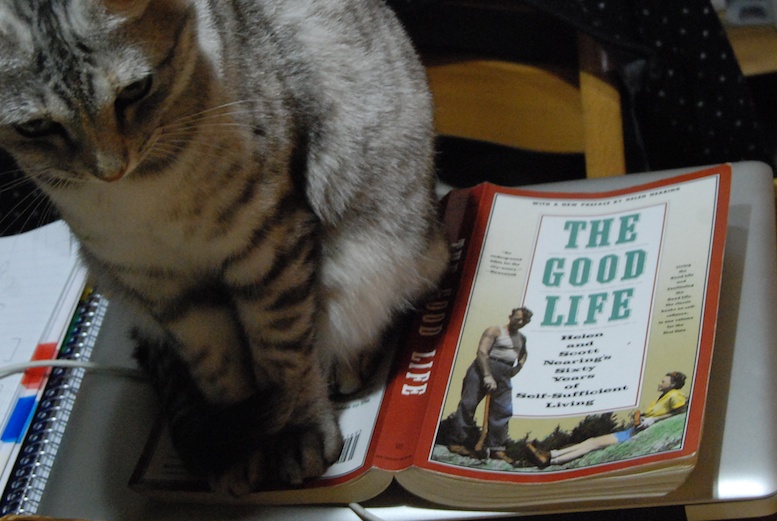
The Good Life

THE GOOD LIFE.
Un excellent book écrit par Helen et Scott Nearing. Wiliam Coperthwaite cite les Nearing comme source d’inspiration dans A Hand made life – in search of simplicity.
En 1932, Helen et Scott Nearing abandonnent leur vie à New York et achètent un large terrain dans le Vermont. Où ils vivront principalement de leurs forêts et de leur jardin. Le livre est un récit de leur vie et de leur philosophie. Scott Nearing est mort à l’âge de 100 ans. Economistes de formation; Helen et Scott décrivent leur approche et leur méthode de façon détaillée et méticuleuse. La richesse des références utilisées est impressionnante et remarquable.
Les bonnes choses doivent être partagées et voici certains extraits de ce livre, dont nous vous recommandons la lecture. On peut regretter qu’aucun éditeur français ne se soit intéressé à ce remarquable récit, et qu’il n’ait pas encore été traduit en français.
DSC_0185
Minou, elle aussi, a beaucoup apprécié.
  • p.5 We left the city with three objectives in mind
The first was economic. We sought to make a depression free living, as independent as possible of the commodity and labor markets, which could not be interfered with by employers, whether business men, politicians or educational administrators. Our second aim was hygienic. We wanted to maintain and improve our health. We knew that the pressures of the city life were exacting, and we sought a simple basis of well being where contact with the earth, and home grown organic food would play a large part.
Our third objective was social and ethical. We desired to liberate et dissociate ourselves, as much as poccible, from the cruder forms of exploitation: the plunder of the planet; the slavery of man and beast; the slaughter of men in war, and of animals for food.
  • p.31 We would attempt to carry on this self-subsistent economy by the following steps: (1) raising as much of our own food as local soil and climatic conditions would permit. (2) Bartening our products for those which we could not or did not produce. (3) Using wood for fuel and cutting it ourselves. (4) Putting up our own buildings with stone and wood from the place, doing the work ourselves. (5) Making such implements as sleds, drays, stone=boats, gravel screens, ladders. (6) Holding down to the barest minimum the number of implements, tools, gadgets and machines which we might buy from the assembly lines of big business (7) If we had to have such machines for a few hours or days in a year *plough, tractor, rototiller, bulldozer, chainsaw), we would rent or trade them for local people instead of buying and owning them.
  • p.32 Ideas of « making money » or « getting rich » have given people a perverted view of economic principles. The object of economic effort is not money, but livelihood. Money can not feed, clothe or shelter. Money is a medium of exchange,-a means of securing the items that make up livelihood. It is the necessaries and the decencies which are important, not the money which may be exchanged for them.
  • p.33 Under any economy, people who rent out money live on easy street. Whether as individuals or banking establishments, they lend money, take security and live on a rich harvest of interest and the proceeds of forced sales. The money lenders are able to enjoy comfort and luxury, without doing any productive labor. It is the borrowing producers who pay the interest or lose their property. Farmers and home owners by the thousands lost everything they had during the Great Depression because they could not meet interest payments. We decided to buy for cash or not at all.
  • p.35 We believe that all life is to be respected -non human as well as human. Therefore, for sport we neither hunt nor fish, nor do we feed on animals. Furthermore, we prefer, in our respect for life, not to enslave or exploit our fellow creatures. Widespread and unwarranted exploitation of domestic animals includes robbing them of their milk or their eggs as well as harnessing them to labor for man. Domestic animals, whether cows, horses, goats, chicken, dogs or cats are slaves. Humans have the power of life or death overt them. Men buy them, own them, sell them, work them, abuse and torture them and have no compunctions against killing and eating them. They compel animals to serve them in multitudinous ways. If the animals resist, rebel or grow old, they are sent to the butcher or else are shot out of hand.
Cats and dogs live dependent subservient lives under the table tops of humans. Domestic pets kill and drive away wild creatures, whose independent, self-respecting lives seem far more admirable than those of docile, dish-fed retainers. We enjoy the wild creatures, and on the whole think they are more lithe, beautiful and healthy than the run of cats and dogs, although some of our best friends in vermont have been canine and feline neighbors.
  • p.91 The keystone of our economy was our food supply. As food  costs are the largest single item in the budget of low income families, if we could raise most of our food instead of buying it on the market, we could make a substantial reduction in our cash outlay and in our required cash income. (…) This decision brought us face to face with three stubborn facts, the Vermont climate, the pitch of the land, and the depleted soil.
  • p.121 most of the food consumed by human beings comes directly from the upper few inches of top soil. A whole soil is one that contains the ingredients necessary to produce sturdy healthy vegetation of the required variety and species. Different plants have different nutritional needs and offer various combinations of minerals, vitamins and enzymes to the animals and humans who consume them. Soil wholeness may be upset by erosion, by cropping, by improper fertilizers. Until the solid balance is restored, the products of an unbalanced soil will be unbalanced vegetation. If such vegetation is consumed, it may transfer its unbalance to the user, causing a person who eats « good food » by ordinary standards, to be far from well.
  • p.122 Good food should be grown on the whole soil, be eaten whole, unprocessed and garden fresh. Even the best products of the best soils lose more or less of their nutritive value if they are processed. Any modification at all is likely to reduce the nutritive value of a whole food. Peeling tomatoes, scrapping carrots, milling wheat, cooking green peas, removes essential partis of the food, causes chemical changes, or drives off vitamins.
  • p.142 We were looking for a kindly, decent, clean and simple way of life. Long ago we decided to live in the vegetarian way, without killing or eating animals; and lately we have largely ceased to use dairy products and have allied ourselves with the vegans, who use and eat no animal products, butter, cheese eggs or milk. This is all in line with our philosophy of the least harm to the least number and the greatest good to the greatest number of life forms.
  • p.144 Apply to vegetables and fruit the principles of wholeness, rawness, garden freshness, and one or few things at a meal, and you have the theory of our simple diet. In practice, the theory gave us a formulated regime, fruit for breakfast, soup and cereal for lunch, salad and vegetables for supper. (…)  We often had a one-day exclusive apple diet to revivify and cleanse the system. (…) Gourmets amongst us dipped whole bananas in honey and then in wheatgerm. Quarter sections of apples were dipped the same way, or spread with peanut butter. Nuts were often cracked and eaten with the apples. Berries were served with maple syrup or honey, or eaten dry. Breakfast was rounded up by a handful of sunflower seeds, herb tea sweetened with honey, or a tablespoon of blackstrap molasses in hot water.
  • p.145 We have gone for months at a time with no breakfast at all and maintained health and suffered no discomfort though carrying on a full program of work. For ten years we have eaten fruit for our first meal of the day, and yet put in four solid hours of hard physical or mental work until lunch. We felt better, worked better and lived better on it than after a stuffy starch, protein-rich breakfast.
  • p.148 All of our meals were eaten at wooden plank table, in wooden bowls, the same bowl right through the meal. This practically eliminated the dish washing problem. With no sauces, no frying and the like, there were few dishes to wash and pans to scrub. (…) We also felt than wooden eating utensils were more neutral and modified the flavor less than the metallic table tools.
These food habits of ours we found simple, economical, and practicable, though they were perhaps not usuals for 20th century Americans. With advancing civilization, the American diet pattern, like everything else, has undergone a thorough-going change. The business of procuring the necessities of life has been shifted form the wood lot, the garden, the kitchen and the family to the factory and the large-scale enterprise. in our case, we moved our center back to the land. There we raised the food we ate. We found it sufficient, delicious and nourishing.  On this diet we maintained a rugged health and patronized no doctors. (….) With vegetables, fruits, nuts and cereals we proved that one could maintain a healthy body as an operating base for a sane mind and a purposeful harmless life.
  • p.151 Livelihood is the central core around which most people build their lives. (…) The majority of human beings, notably in industrial communities, dedicate their best hours in their best years to getting an income and exchanging it for the necessaries and decencies of physical and social existence. Children, old people, the crippled, the sick, the voluntarily parasitic are at least partially freed from livelihood preoccupations. Able bodied adults have little choice. They must meet the demands of livelihood or pay a heavy penalty in social disapproval, insecurity, anxiety and finally in physical hardship.
Livelihood needs, particularly for the necessities, are continuous, operating every day, of every month, of every year.  An interruption in the supply of necessary goods and services, even for a short time, results in hardship and creates an atmosphere of uncertainty, anxiety and fear. By what means are the stability and security of livelihood to be safeguarded ?
(…) We would suggest seven procedures which will maximize the stability and security of livelihood.
First, regulating the sources of livelihood in such a manner that all able-bodied adults will render a service in exchange for income, thus eliminating the social divisions which develop when a part of the community lives on unearned income while the remainder exchanges labor power for its livelihood.
Second, avoid gross and glaring inequalities in livelihood status.
Third, budget and plan the community economy.
Fourth, keep community books and open the accounts to public inspection.
Fifth, pay as you go, either in labor or in materials, this avoiding inflation.
Sixth, practice economy, conserving resources, producing and consuming as little as necessary rather than as much as possible.
Seventh, provide a wide range of social services based upon specialization and cooperation.
  • p.153 Thoreau said on cutting one’s own fuel:  » It warms us twice, and the first warmth is the most wholesome and memorable, compared with which the other is mere coke… The greatest value is received before the wood is teamed home. »
  • p.154 Our purpose (…) was not to multiply food, housing, fuel and the other necessaries, but to get only enough of these things to meet the requirements of a living standard that would maintain our physical efficiency and at the same time provide us with no end in itself;  rather it was a vestibule into an abundant and rewarding life. Therefore we produced the necessaries only to a point which would provide for efficiency. When we reached that point we turned our attention and energies from bread labor to avocations or to social pursuits.
Current practice in US economy called upon the person who had met his needs for necessaries to turn his attention forthwith to procuring comforts and conveniences, and after that to luxuries and superfluities. Only by such procedures could an economy based on profit accumulation hope achieve the expansion needed to absurd additional profits and pay a return to those investing in the new industries.
Our practice was almost the exact opposite of the current one. ur consumer necessaries came mostly from the place, on a use basis. Comforts and conveniences came from outside the farm and had to be procudre either by barter or through cash outlays. (…) « Earn a little and spend a little less ».  Food from the garden and wood from the forest were the product of our time and labor. We paid no rent. Taxes were reasonable. We bought no candy, pastries, meats, soft drinks, alcohol, tea, coffee or tobacco. These seemingly minor items mount up and occupy large place in the ordinary’s family’s budget.
  • p.155 Mark Twain: Civilization is a limitless multiplication of unneccessary necessaries. A market seeks by ballyhoo to bamboozle consumers into buying things they neither or want, thus compelling them to sell their labor power as a means of paying for their purchases. Since our aim was liberation from the exploitation accompanying the sale of labor power, we were as wary of market lures as a wise mouse is wary of other traps.
  • p.158 City dwellers, accustomed to a wide variety of services, get to a point at which they believe that the essential questions of day to day living can be settled by arrangement, chiefly over a telephone. A customer with a ten dollar bill can get wonderful results in a department store. But put the same person in the backwoods with a problem to be solved and an inadequate supply of materials and tools. There money is useless, Instead, ingenuity, skill, patience and persistence are the coin current. The store customer, who comes home with a package under his arm  has learned nothing, except that a ten dollar bill is a source of power in the market place. The man or woman who has converted material into needed products via tools and skills has matured in the process.
  • p.159 William Cooper « It is not large funds that are wanted, but a constant supply, like a small stream that never dies. To have a great capital is not so necessary as to know how to manage a small one and never be without a little. »
  • p.192 We are opposed to the theories of a competitive, acquisitive, aggressive, war-making social order, which butchers for food and murders for sport and for power. The closer we have to come to this social order the more completely are we a part of it. Since we reject it in theory, we should , as far as possible, reject it also in practice. On no other basis can theory and practice be unified. At the same time, and to the utmost extent, we should live as decently, kindly, justly, orderly and efficiently as possible. Human beings, under any set of circumstances, can behave well or badly. Whatever the circumstances, it is better to love, create and construct than to hate, undermine and destroy, or, what may be even worse at times, ignore and lassoer passer.


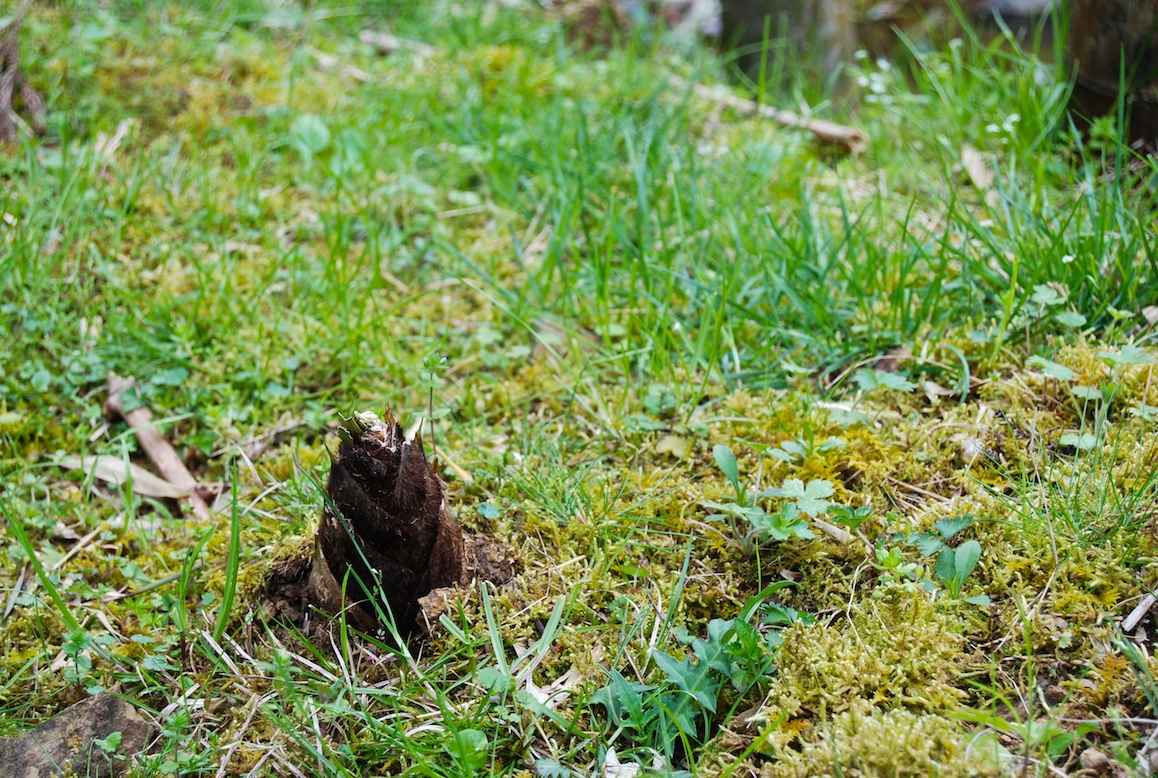
Pousses de bambou

L’histoire de Hiroshi et de Minou


Il y a 3 mois, Hiroshi, l’ami d’un ami, trouve un chaton de deux mois abandonné sur un chantier. Hiroshi est paysagiste. Il a 29 ans.
Le chaton est très affaibli. Hiroshi lui apporte à manger sur le chantier, où le chaton le retrouve regulièrement. Il songe un moment à amener le chaton chez lui, mais Hiroshi a déjà un hamster chez lui et quelque chose lui dit que le hamster et le chat ne feront pas bon ménage.
 
H. cherche alors dans son carnet d’adresse quelqu’un qui pourrait prendre minou chez lui. Hiroshi. appelle S. 
 
H. « Dis, j’ai un problème …. est-ce-que tu pourrais m’aider ? »
S. « Quoi? Tu as besoin d’argent ?? »
H. « Non,  …  c’est un petit chaton abandonné, je cherche quelqu’un qui puisse le prendre chez lui et s’en occuper, car je ne peux pas le prendre chez moi … »
S. « Ah … Je vois ! Laisse-moi réfléchir »
 
S. ensuite nous contacte et nous demande si on voudrait pas prendre le chat. Ben ouais … pourquoi pas !
 
Puis le week end suivant nous buvons quelques bières chez S. au fond la montagne. Le feu crépite. Il fait nuit et frais. Hiroshi que nous ne connaissons pas encore arrive dans un camion magnifique ; bardé de haut parleurs !
Hiroshi est imposant. Très grand, et un ventre de buveur de bière. Des cheveux hirsutes, une coiffure rebelle. Et un grand sourire plein de gentillesse.
Salutations. Il apporte une petite caisse en carton d’où il sort une petite boule de poils, apeurée et tellement misérable que nous sommes tout attristés pour elle. La petite boule de poils lui saute des mains et part se cacher sous l’évier de la cuisine. 
 
Nous prenons le chat chez nou.. L’appelerons Minou. Déjà, nous sommes très touchés par l’attention et la gentillesse de Hiroshi. qui s’est occupé du chaton, lui a trouvé une maison, et en plus a fait 20 kilomètres pour nous l’apporter. Rien ne l’obligeait à tout celà. Dans ma famille en France, un oncle se débarrassait des chatons en les jetant dans les toilettes…
 
Un mois plus tard, nous retrouvons Hiroshi et sa famille lors d’une petite fête. 
 
Hiroshi nous offre une bouteille de vin pour nous remercier d’avoir adopté le chat: nous recevons là une grande leçon de gentillesse.
DSC_0670
Minou à son arrivée chez nous.
DSC_0717
Hiroshi, un homme au grand coeur.

Les Apiculteurs

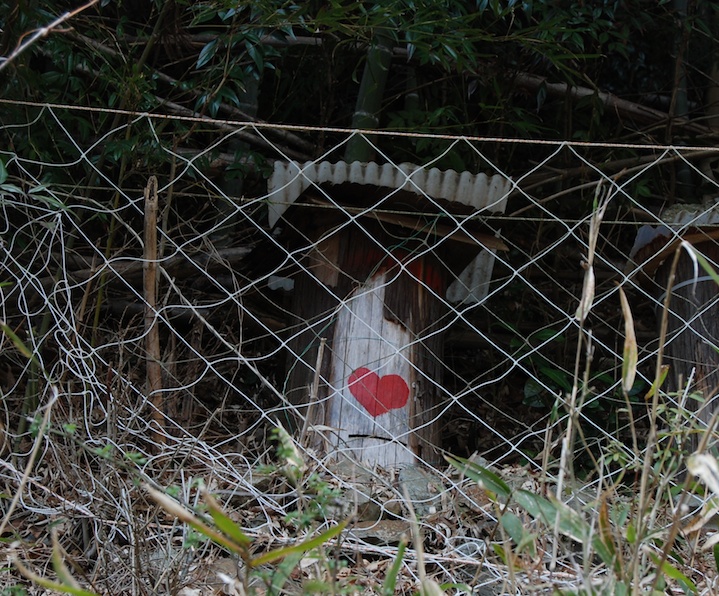
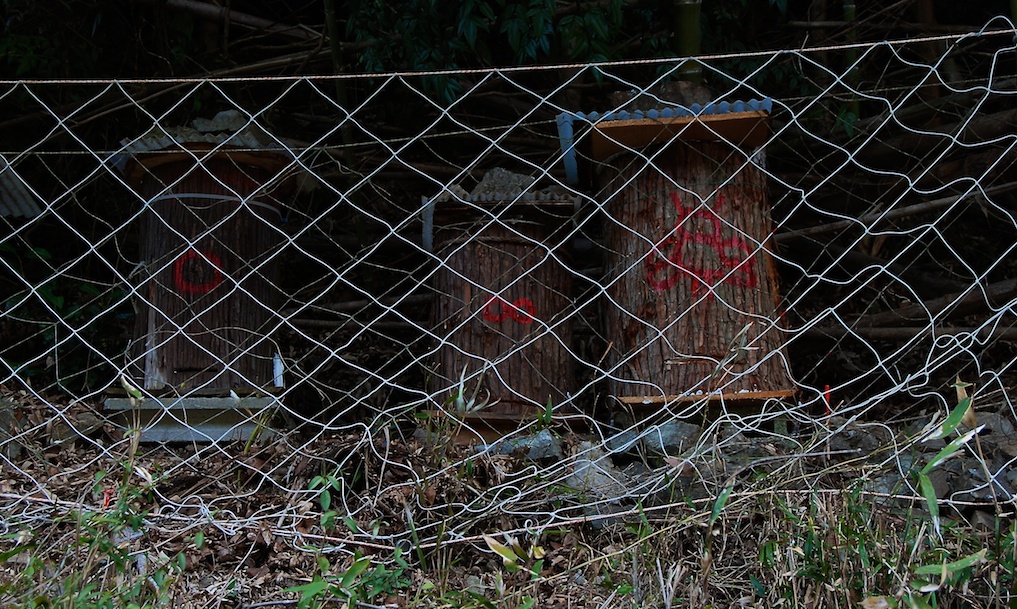
Le promeneur remarquera sur les ruches disposées ça et là au bord de la route du village, des signes rouges.
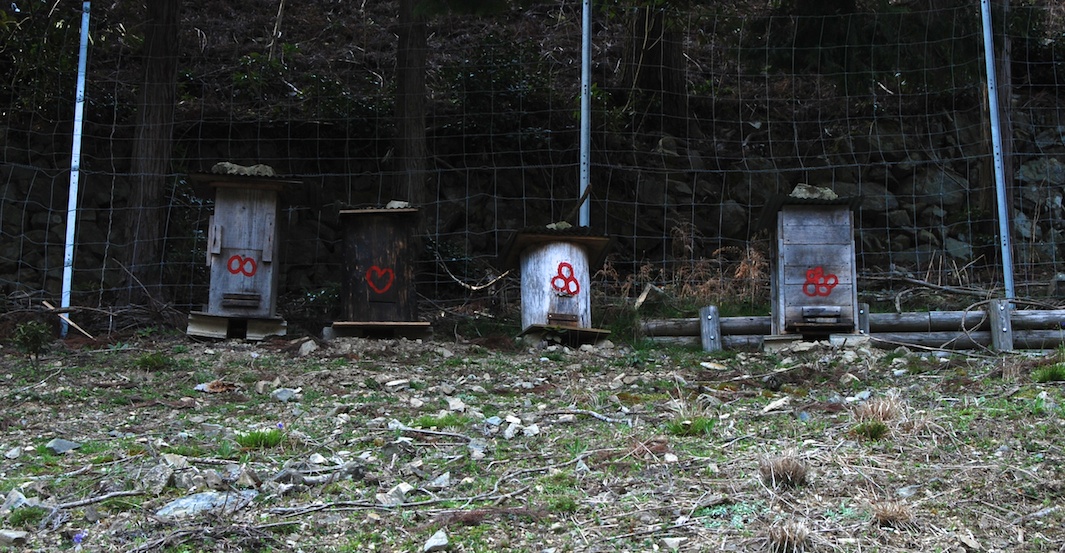
On y a dessiné un coeur, une abeille, des marguerites.
Les voisins apiculteurs expliquent que les signes sont pour inviter les essaims à venir d’installer dans les ruches.
Je leur demande si c’est vraiment efficace, si les signes rouges à l’entrée des ruches augmentent les chances d’y acceuillir les essaims, et là ils répondent … qu’ils n’en sont pas certains. En tout cas, ça fait joli ….
DSC_1122 DSC_1127 DSC_1128 (1)


Minou et Calcifer

Nanohana


Dans le jardin nous récoltons les nanohana. 菜の花。Ma femme m’apprend que nanohana en français, c’est le colza. Ca a plutôt bien poussé. Ca a poussé tout seul; en fait. Je n’ai fait que préparer la terre, j’ai labouré une fois, et ai ajouté du crottin de cheval.

Puis ça ça poussé sans la moindre intervention de notre part.

Le nanohana agrémentera la soupe de miso du soir.

DSC_0696
Pendant ce temps là minou le chat regarde par la fenêtre.
DSC_0693

Le jardin, samedi matin

Ce samedi matin je me lève de bonne heure; 6 heures. Je commence la journée en offrant deux petits poissons à Minou le chat; et en faisant le feu dans le ventre de Calcifer. Toute la famille dort encore dans les futons bien chauds; mais lorsque tout le monde sera réveillé il fera moins froid dans la cuisine. Faut dire, nous n’avons d’autre moyen de chauffage que Calcifer notre poêle à bois.

Puis je vais derrière la maison dans le jardin, où je m’affaire avec grand plaisir. Cette année je veux apprendre le plus possible en terme de jardinage. L’année dernière c’était le chaos total dans le jardin; si bien que je ne me souvenais plus de ce que j’avais planté, ni quand ni où.

Cette année je m’organise, je prends des notes et je veux une démarche plus structurée, car sinon je n’apprendrai jamais. J’ai redéployé le jardin en petites sections distinctes; et mieux délimitées. J’ai même acheté deux bouquins français et le soir après le travail je révise mes légumes .

Ce matin donc je plante des pois et de la roquette. Des gestes simples et très agréables. Quel plaisir que de travailler la terre. C’est une très belle journée qui commence. Le soleil se lève. On sent que le printemps arrive. Il y a déjà quelques jours, j’avais remarqué le chant plus riche des oiseaux. Ecoutez.

Les nouveaux voisins

Un jeune couple va s’installer dans le village. Ils ont fait construire une jolie maison.

Avec leur fille de 2 ans, la moyenne d’âge va baisser !
C’est un heureux événement. Désormais notre fils de 9 ans ne sera plus le seul enfant du hameau. Le taux de natalité et la corruption endémique sont les grands maux dont souffre le Japon.
Le jeune couple n’a pas fait de mune-age lors de la construction de leur maison. Nous avions eu l’occasion d’assister à un mune-age l’année dernière, lors de la construction de la maison de monsieur S.
La maison du jeune couple a été terminée hier. Le soir, ils passent de maison en maison et se présentent à tous les habitants.
Ils offrent à chacun un plat de riz gluant, cuit avec des haricots rouges.
Le riz lors de la cuisson prend la couleur des haricots, d’où le nom du plat; ‘riz rouge’: お赤飯 (おせきはん o seki han
La couleur rouge est symbôle de bonheur, et donne à ce plat une signification particulière.
DSC_0436

A handmade life

Je viens de finir A Hand made life – in search of simplicity de Wiliam Coperthwaite.

Un livre remarquable.
En voici quelques extraits.
ISBN 978-1-933392-47-9
http://amzn.com/1933392479

p.14
if it is true that folk wisdom is our basic wealth, the chief insurance of a culture’s worth, then we are nearly bankrupt. Traditional knowledge is disappearing at an accelerating rate, as the creations of local craftspeople are replaced by factory made products, who are not designed with a concern for the improvement of human life but merely for profit. We need to be collecting as many examples of the old knowledge and skill, before they are forgotten and lost forever.
p.22 what is beautiful is easier to live with and care for. If we had fewer things and more meaningful ones, our homes and towns would be less cluttered, less ugly, and more peaceful. Our surroundings have a direct relationship to how tired we get and how happy we feel.
p.24 there are many unnecessary things in our daily lives that take up the largest part of our visual space.
p.25 We must learn to see beauty in our neighbors living well.
p.25 We need to build a society in which everyone wins. Losers are not good for business. the cost of having so many losers is tremendous in term of happiness, in $ of healthcare, famine relief, prisons (…) in wasted human potential.
p.25 true beauty must be as pleasing to the mind as to the eye.
p.27 When we look at total cost to society of buying a car, we may start searching for a vehicle made through a more beautiful form of production.
p.28 Life should be a search for harmony -not a battle, not a challenge- neither domination nor contending with nature but seeking harmony (…) We need to surround ourselves with things made with care and affection.
p.34 Work, to some, suggests drudgery -prostitution in order to earn a living- something one must do. For others of us, this is a gross misuse of the term: we believe that work is the productive and creative activity that makes human life possible.
p.36 Work is no misunderstood. The prevalent attitude toward hard work is that it is a necessary evil and that, while perhaps its burdens ought to be shared -done out of duty- works is definitively not an experience to be enjoyed. Many people learn to accomplish obligatory tasks well, at least efficiently; they dutifully do their share of labor to meet personal or family needs. Yet they consider bread labor less important than art, thought, research, or « creative » activities.
I protest. Bread labor is a primary activity of life, equal to or above these other pursuits in importance. What if we have been on the wrong track ? What if work, including the meeting of mundane needs, were to be recognized as an essential tool in understanding ourselves and our world ? What if we were to see that creativity, to be valuable and not merely dilettante, must be rooted in work ? Without labor, our way of life would not exist.
p.37 We all agree that slavery is wrong.Isn’t it equally wrong  to sell oneself ? Employers make it easy. pleasant working space, interesting companions, large salary, pension and insurance plans, short hours, long holidays, stock options, bonuses, (…) But this is not work that you feel good about doing -work that you do only for the pay and the benefits- it remains prostitution.
p.43 Those who feel « the need to get away » with vacations and retirement have not had the joy of finding the right job. Productive leisure is more satisfying than non productive leisure.
p.46 The story goes that Paden Powell got the idea from the boy scouts from seeing a crowd of people watching a soccer match. He suddenly realized  that the crowd should be  playing rather than watching.
As people, we live vicariously much of the time, we watch someone else’s drama, sex life, ball games etc. or listen to someone else’s music. Instead of vicarious ball games, how about a real gas of split wood -or plant garden- or catch a porcupine for supper ?
p.48 Good schooling and good teaching can be delightful, and can aid greatly in someone’s advancement, they are not fundamental to education: learning is.
p.50 out of fear of misusing children, we have deprived them of the opportunity of doing real work. the work of most adults is hidden rom the children. even worse, most of the adults they meet do not enjoy their work. As a result of this coercion, and the corresponding lack of opportunities for fully applied imaginations, is it any wonder that kids turn for their thrills to stimuli that are antigrowth and antisocial ? Kids need to see productive work being undertaken by those around them and to be given an opportunity to take part at an early age. Useful work as a learning tool has largely been ignored by our educational system. Not only do students learn in the doing of the work but also grow in emotional stability as they see the work of their hands being of use to others. For example, while the family is gathering and stacking firewood for winter, encourage children to make stake of their own. Then, at Christmas, use only wood from those stacks, letting the children see try directly that their work is keeping the family warm.
p.69 In modern parlance, WE TEACH WHAT WE ARE. The art of living is the most important of the arts. All others derive from this. Without the vision of a beautiful life, the other arts are incomplete. Which is more important ?? beautiful things ? or beautiful life ? We need vigilance if these two outlooks  are not to compromise on another, for instance, wanting to live a more violent life while holding a violent concept of beauty.
p.71 We teach children brutality with the media, with « histories », with toys and with military training. We feed them a steady diet of violence in their most formative years and expect them to grow into gentle, sensitive, loving adults. It simply can not be done. the violence of wars and urban rioting is minor compared to the scale of the violence that goes on every day in the lives of small children. We destroy creativity, spontaneity and confidence, we stifle curiosity, sensitivity and a sense of wonder, we kill love.
p.71 we use « primitive » to refer to a culture that we consider to be un civilized and also use the term for someone who is violent or brutal. Yet some allegedly primitive cultures have very little violence – for example the Lapps, Eskimos- while many civilized cultures are often engaged in wars of annihilation – Rome, Germany, US. We cal ourselves civilized though we spend more on weaponry than any other society has ever done. This hypocrisy, a form of self deception, is dangerous. Hypocrisy keeps us from trull knowing ourselves, the first stage in growing to individual and cultured maturity.
p.74 If I fell so concerned about others forms of life, why am I not a vegetarian ? Somehow I have never been able to take the anthropocentric prosition of putting animal life on a higher plane than plant life by eating plants and refusing to eat animals. From there it is easy to set human up as the highest of the animals, which seems a dangerous step to take (…) it is painful to choose to destroy anything -plant, animal, living or non living- but life demands destruction. We  plants and animals are all interdependent. We take away and give back. The least we can do is not to wastefully destroy, to use as little as need to be, and to cultivate a reverence for all things, then to ask that our remains be gratefully returned to the cycle.
p.75 We should use whatever we use with reverence, with concern for its nature, beauty and spirit.
p.76 We show ignorance of our kinship with nature by our burial practices. Are so afraid of becoming one with the earth that we need to fill dead bodies with poisons and seal them away in caskets to slow their return to the soil ? To deny our nature in this way demonstrates a fundamental insecurity and lack of appreciation for life and its cycles. How much more beautiful it would be to ease the body’s transition to compost, in the process helping the earth’s green carpet to bloom.
p.80 The finest gifts depend on thoughtfulness, sensitivity, knowledge, and caring. Not on the material wealth of the giver (). A more generous way of defining wealth requires rethinking many aspects of our lives: our dress, our homes, our way of living. Rather than rare paintings and China, why not fill our homes with the presence of joy, evidence of the search of wisdom, and signs of caring ?
p.82 fashion is a device to separate fools from their money, a snare to enrich merchants and producers. rather than being a follower of expensive fashion, why not be leader in simple fashion ? Be clothed in purpose, clarity and kindness, and dress in a way that makes the best use of the world’s supply of materials.
p.83 violence is rooted in insecurity and want, and simplicity in living addresses both of these ills. (…) the simpler something is to make, the more easily it can be replaced and the less wear dependent on special skills, materials, or markets. Simplicity is not just a matter of doing more with less, or spending less, or using less of the world’s resources, it is a matter of freedom.
p.84 The home you invest your time, energy and money in should be the one you prefer esthetically.
p.85 we are accustomed to thinking in game terms, of winning and losing, We need to develop a philosophy of life in which there are no losers, a world where everyone can win.
p.92 simple living is less violent and less exploitative. when we live in complexity, our needs are so great in terms of energy and material goods that we live at the expense of others. as we simplify our homes, our clothes, and our eating habits, not only is less work needed to supply us but also less effort to maintain our way of life as well.
 p.108
     We live in a world where the word « education » does not mean learning but schooling. « Civilization » does not mean cultivation and culture but rather nation states spending astronomical amounts of wealth on preparation for war.
« Food » does not mean nourishment but an endless array of substitutes, adulterants, preservatives and growth hormones. « Shoe » does not mean foot wear but foot ornament. And « Freedom » does not mean liberty but wage slavery, welfare, and prostitution of labor.