
Catégorie: la nature
Voyage
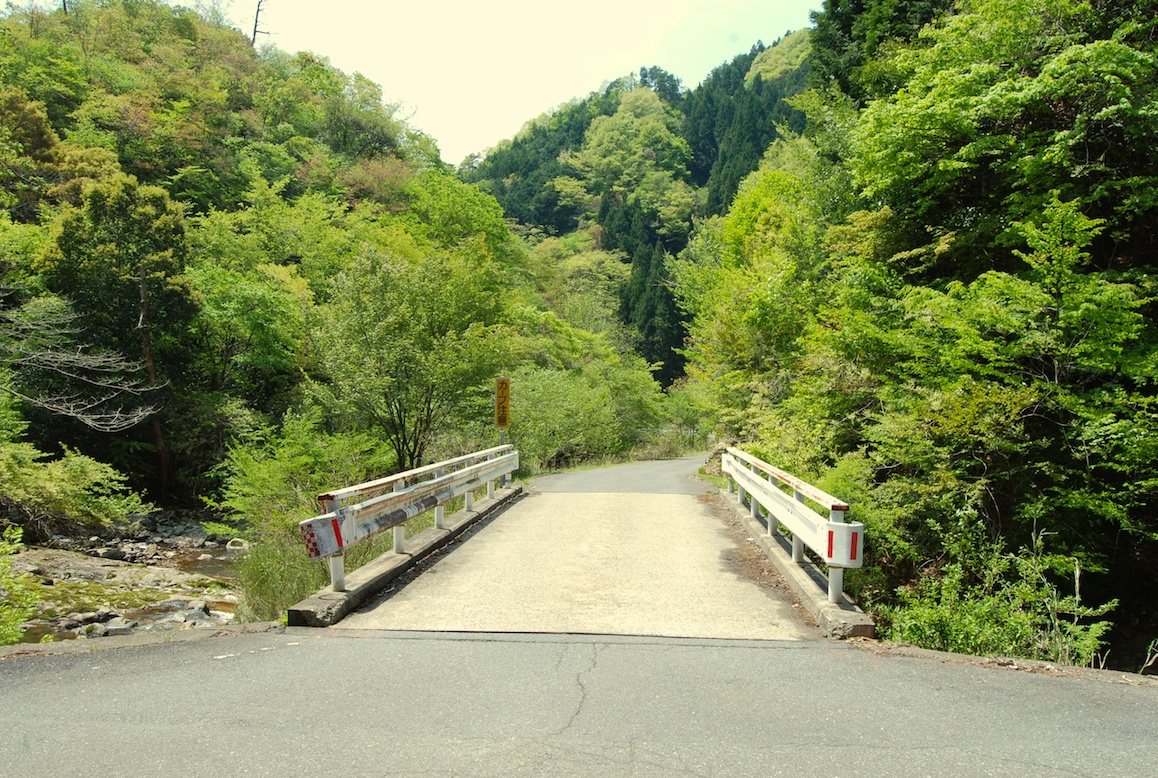
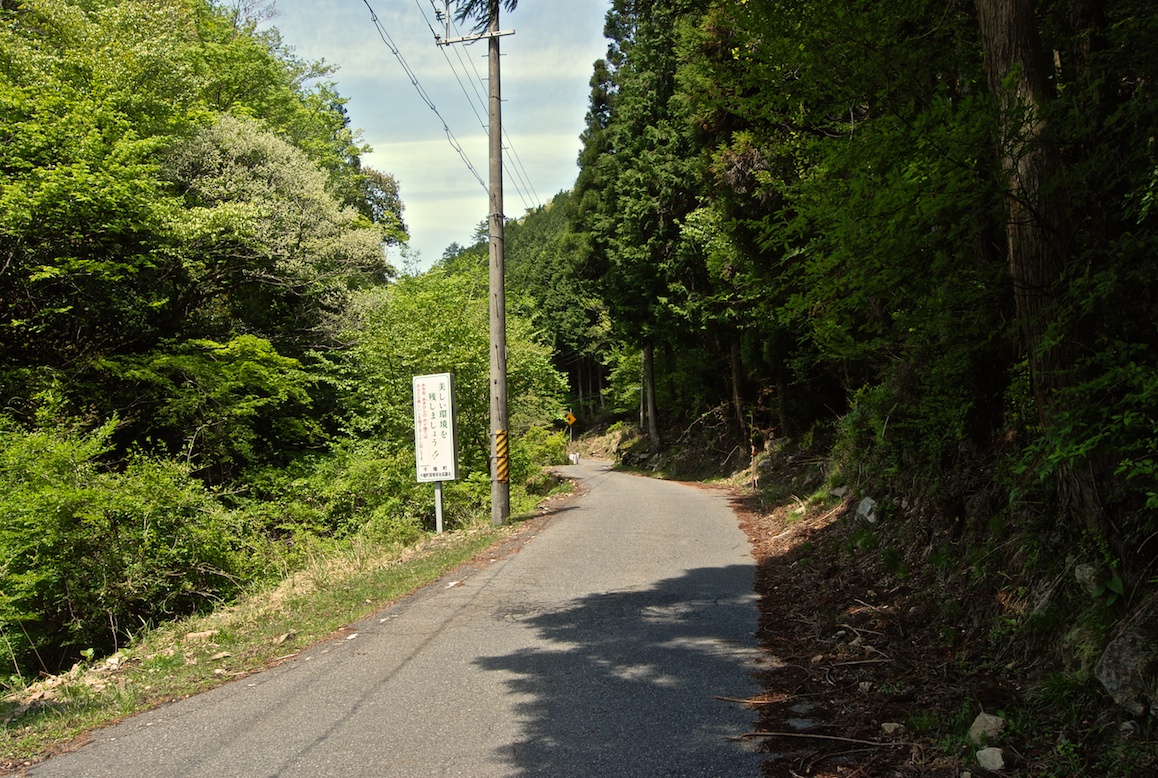
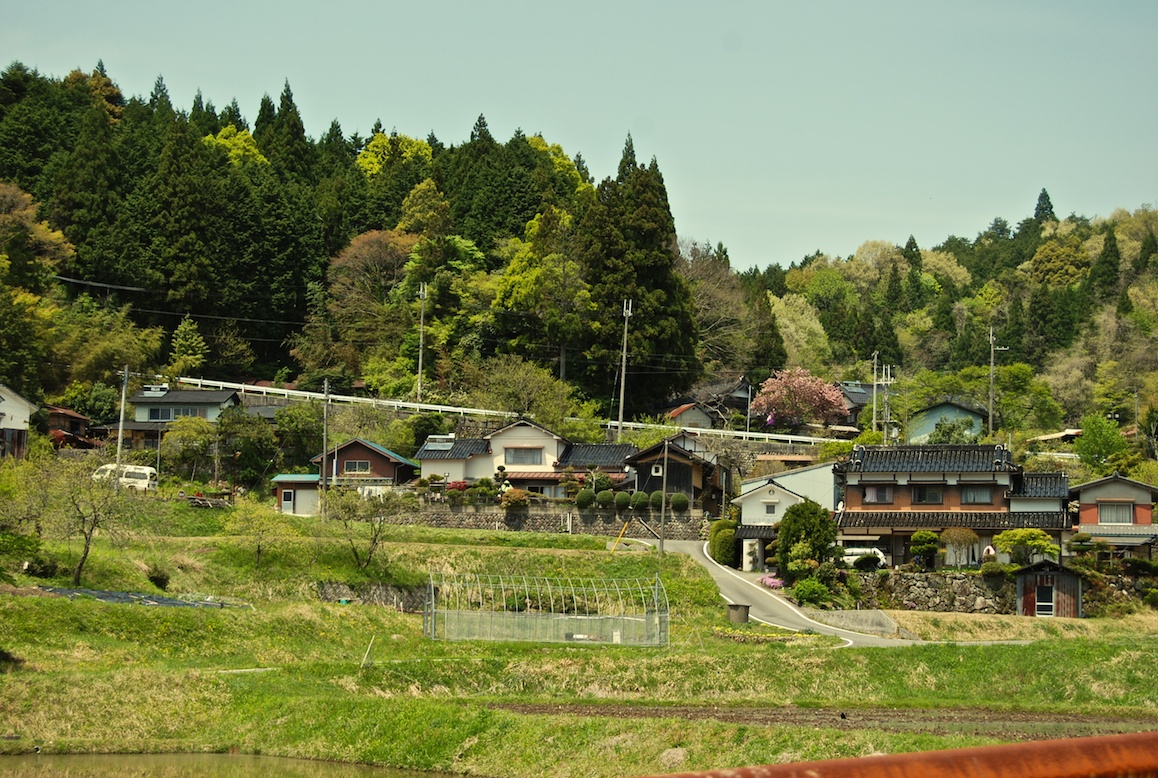
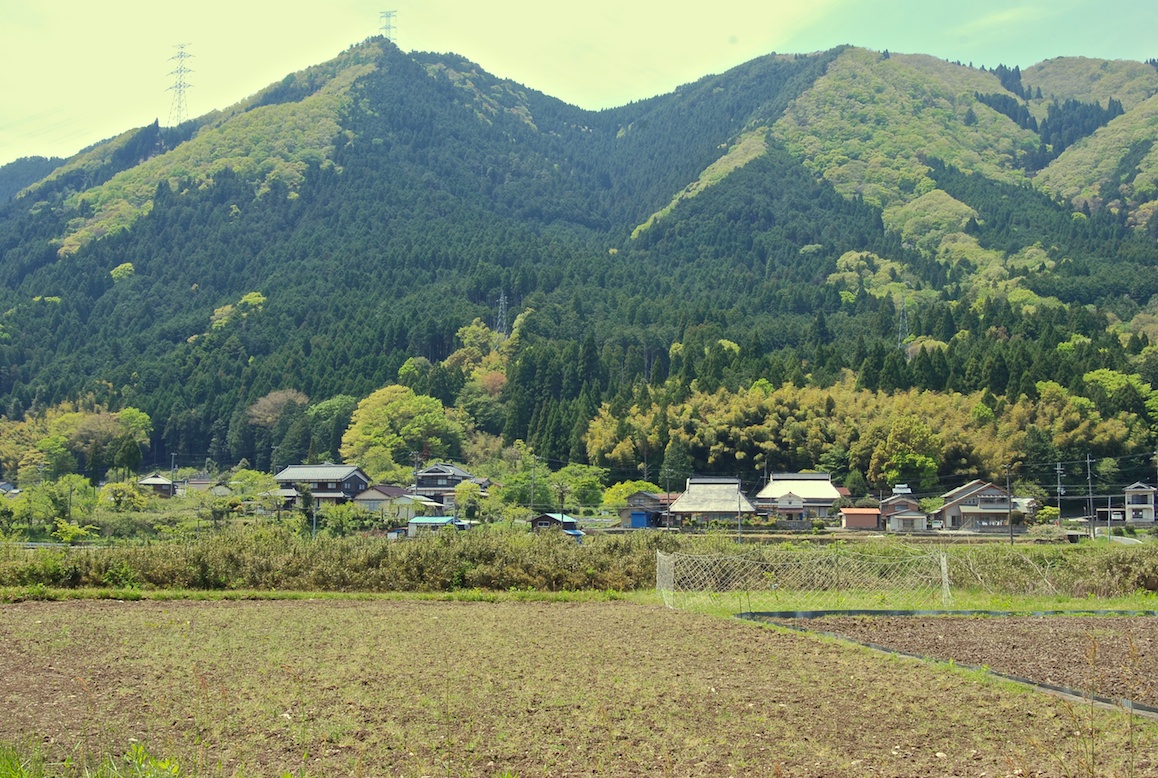
Nous partons à 30 kilomètres du village; vers l’ouest. La région est un peu plus sauvage et préservée. Les autoroutes et les grandes surfaces sont loins.


Sous le soleil
Exactement, sous le soleil, un gecko se réchauffe devant l’entrée de la maison.

The Good Life
- ISBN-10: 0805209700
- ISBN-13: 978-0805209709
- http://www.amazon.fr/dp/0805209700
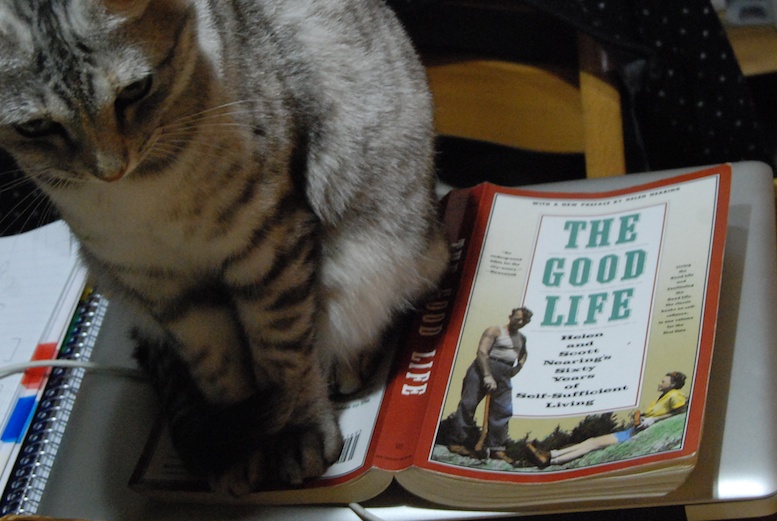
- p.5 We left the city with three objectives in mind
- p.31 We would attempt to carry on this self-subsistent economy by the following steps: (1) raising as much of our own food as local soil and climatic conditions would permit. (2) Bartening our products for those which we could not or did not produce. (3) Using wood for fuel and cutting it ourselves. (4) Putting up our own buildings with stone and wood from the place, doing the work ourselves. (5) Making such implements as sleds, drays, stone=boats, gravel screens, ladders. (6) Holding down to the barest minimum the number of implements, tools, gadgets and machines which we might buy from the assembly lines of big business (7) If we had to have such machines for a few hours or days in a year *plough, tractor, rototiller, bulldozer, chainsaw), we would rent or trade them for local people instead of buying and owning them.
- p.32 Ideas of « making money » or « getting rich » have given people a perverted view of economic principles. The object of economic effort is not money, but livelihood. Money can not feed, clothe or shelter. Money is a medium of exchange,-a means of securing the items that make up livelihood. It is the necessaries and the decencies which are important, not the money which may be exchanged for them.
- p.33 Under any economy, people who rent out money live on easy street. Whether as individuals or banking establishments, they lend money, take security and live on a rich harvest of interest and the proceeds of forced sales. The money lenders are able to enjoy comfort and luxury, without doing any productive labor. It is the borrowing producers who pay the interest or lose their property. Farmers and home owners by the thousands lost everything they had during the Great Depression because they could not meet interest payments. We decided to buy for cash or not at all.
- p.35 We believe that all life is to be respected -non human as well as human. Therefore, for sport we neither hunt nor fish, nor do we feed on animals. Furthermore, we prefer, in our respect for life, not to enslave or exploit our fellow creatures. Widespread and unwarranted exploitation of domestic animals includes robbing them of their milk or their eggs as well as harnessing them to labor for man. Domestic animals, whether cows, horses, goats, chicken, dogs or cats are slaves. Humans have the power of life or death overt them. Men buy them, own them, sell them, work them, abuse and torture them and have no compunctions against killing and eating them. They compel animals to serve them in multitudinous ways. If the animals resist, rebel or grow old, they are sent to the butcher or else are shot out of hand.
- p.91 The keystone of our economy was our food supply. As food costs are the largest single item in the budget of low income families, if we could raise most of our food instead of buying it on the market, we could make a substantial reduction in our cash outlay and in our required cash income. (…) This decision brought us face to face with three stubborn facts, the Vermont climate, the pitch of the land, and the depleted soil.
- p.121 most of the food consumed by human beings comes directly from the upper few inches of top soil. A whole soil is one that contains the ingredients necessary to produce sturdy healthy vegetation of the required variety and species. Different plants have different nutritional needs and offer various combinations of minerals, vitamins and enzymes to the animals and humans who consume them. Soil wholeness may be upset by erosion, by cropping, by improper fertilizers. Until the solid balance is restored, the products of an unbalanced soil will be unbalanced vegetation. If such vegetation is consumed, it may transfer its unbalance to the user, causing a person who eats « good food » by ordinary standards, to be far from well.
- p.122 Good food should be grown on the whole soil, be eaten whole, unprocessed and garden fresh. Even the best products of the best soils lose more or less of their nutritive value if they are processed. Any modification at all is likely to reduce the nutritive value of a whole food. Peeling tomatoes, scrapping carrots, milling wheat, cooking green peas, removes essential partis of the food, causes chemical changes, or drives off vitamins.
- p.142 We were looking for a kindly, decent, clean and simple way of life. Long ago we decided to live in the vegetarian way, without killing or eating animals; and lately we have largely ceased to use dairy products and have allied ourselves with the vegans, who use and eat no animal products, butter, cheese eggs or milk. This is all in line with our philosophy of the least harm to the least number and the greatest good to the greatest number of life forms.
- p.144 Apply to vegetables and fruit the principles of wholeness, rawness, garden freshness, and one or few things at a meal, and you have the theory of our simple diet. In practice, the theory gave us a formulated regime, fruit for breakfast, soup and cereal for lunch, salad and vegetables for supper. (…) We often had a one-day exclusive apple diet to revivify and cleanse the system. (…) Gourmets amongst us dipped whole bananas in honey and then in wheatgerm. Quarter sections of apples were dipped the same way, or spread with peanut butter. Nuts were often cracked and eaten with the apples. Berries were served with maple syrup or honey, or eaten dry. Breakfast was rounded up by a handful of sunflower seeds, herb tea sweetened with honey, or a tablespoon of blackstrap molasses in hot water.
- p.145 We have gone for months at a time with no breakfast at all and maintained health and suffered no discomfort though carrying on a full program of work. For ten years we have eaten fruit for our first meal of the day, and yet put in four solid hours of hard physical or mental work until lunch. We felt better, worked better and lived better on it than after a stuffy starch, protein-rich breakfast.
- p.148 All of our meals were eaten at wooden plank table, in wooden bowls, the same bowl right through the meal. This practically eliminated the dish washing problem. With no sauces, no frying and the like, there were few dishes to wash and pans to scrub. (…) We also felt than wooden eating utensils were more neutral and modified the flavor less than the metallic table tools.
- p.151 Livelihood is the central core around which most people build their lives. (…) The majority of human beings, notably in industrial communities, dedicate their best hours in their best years to getting an income and exchanging it for the necessaries and decencies of physical and social existence. Children, old people, the crippled, the sick, the voluntarily parasitic are at least partially freed from livelihood preoccupations. Able bodied adults have little choice. They must meet the demands of livelihood or pay a heavy penalty in social disapproval, insecurity, anxiety and finally in physical hardship.
- p.153 Thoreau said on cutting one’s own fuel: » It warms us twice, and the first warmth is the most wholesome and memorable, compared with which the other is mere coke… The greatest value is received before the wood is teamed home. »
- p.154 Our purpose (…) was not to multiply food, housing, fuel and the other necessaries, but to get only enough of these things to meet the requirements of a living standard that would maintain our physical efficiency and at the same time provide us with no end in itself; rather it was a vestibule into an abundant and rewarding life. Therefore we produced the necessaries only to a point which would provide for efficiency. When we reached that point we turned our attention and energies from bread labor to avocations or to social pursuits.
- p.155 Mark Twain: Civilization is a limitless multiplication of unneccessary necessaries. A market seeks by ballyhoo to bamboozle consumers into buying things they neither or want, thus compelling them to sell their labor power as a means of paying for their purchases. Since our aim was liberation from the exploitation accompanying the sale of labor power, we were as wary of market lures as a wise mouse is wary of other traps.
- p.158 City dwellers, accustomed to a wide variety of services, get to a point at which they believe that the essential questions of day to day living can be settled by arrangement, chiefly over a telephone. A customer with a ten dollar bill can get wonderful results in a department store. But put the same person in the backwoods with a problem to be solved and an inadequate supply of materials and tools. There money is useless, Instead, ingenuity, skill, patience and persistence are the coin current. The store customer, who comes home with a package under his arm has learned nothing, except that a ten dollar bill is a source of power in the market place. The man or woman who has converted material into needed products via tools and skills has matured in the process.
- p.159 William Cooper « It is not large funds that are wanted, but a constant supply, like a small stream that never dies. To have a great capital is not so necessary as to know how to manage a small one and never be without a little. »
- p.192 We are opposed to the theories of a competitive, acquisitive, aggressive, war-making social order, which butchers for food and murders for sport and for power. The closer we have to come to this social order the more completely are we a part of it. Since we reject it in theory, we should , as far as possible, reject it also in practice. On no other basis can theory and practice be unified. At the same time, and to the utmost extent, we should live as decently, kindly, justly, orderly and efficiently as possible. Human beings, under any set of circumstances, can behave well or badly. Whatever the circumstances, it is better to love, create and construct than to hate, undermine and destroy, or, what may be even worse at times, ignore and lassoer passer.
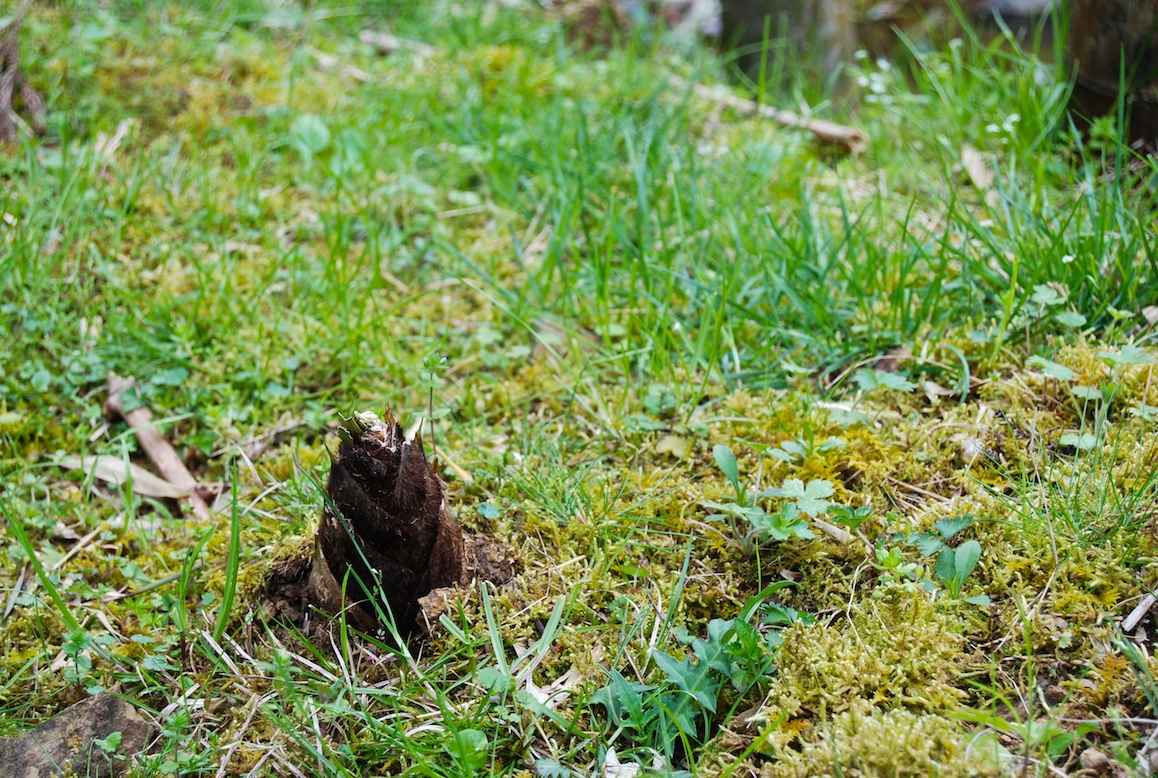
Pousses de bambou
Les pousses de bambou … poussent.
Pattes griffues d’ours qui ont passé l’hiver sous terre, et qui veulent sortir voir le soleil. Ils grattent par en dessous… sans faire de bruit.


Les plantes de la rivière
Au bout du jardin coule une rivière.
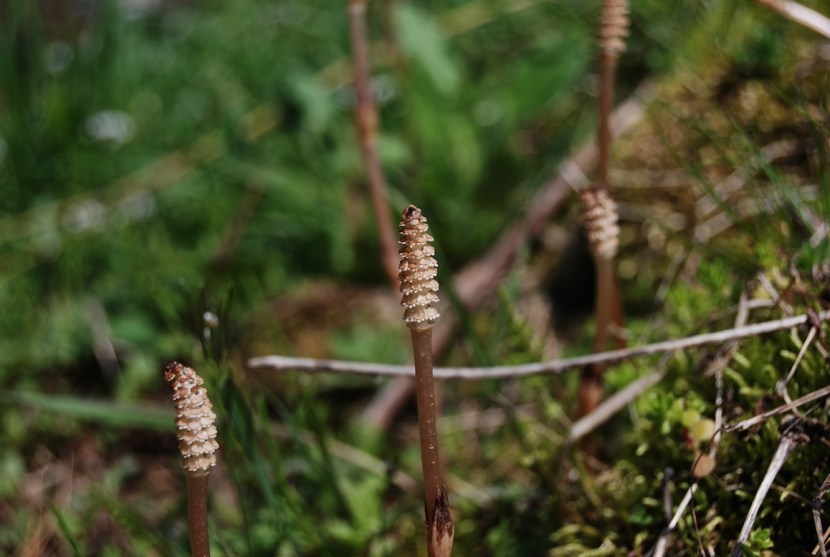
Sur les berges en ce début du printemps on trouve des plantes appréciées des gourmets du village.
Séri せり Oenanthe javanica http://en.wikipedia.org/wiki/Oenanthe_javanica

karashina カラシナ ou moutarde brune http://fr.wikipedia.org/wiki/Moutarde_brune

Tsukushi つくしPrêle_des_champs http://fr.wikipedia.org/wiki/Prêle_des_champs
La culture sur butte
Sepp Holzer présente dans son book comment il a développé et utilisé la culture sur butte. La culture sur butte est régulièrement citée lorsque l’on parle de permaculture.
Il s’agit de regrouper du bois mort, humide, spongieux, d’ajouter des feuilles et autres matières végétales etc et de recouvrir le tout de terre. Cela forme un butte d’où le nom de la technique.
Sur youtube j’ai découvert cette excellente présentation par Philip Ferrer qui explique la mise en pratique de la culture sur butte.
On voit ce monsieur à l’accent étonnant chercher du bois mort en forêt et monter une butte dans son jardin. Son jardin d’ailleurs est magnifique.
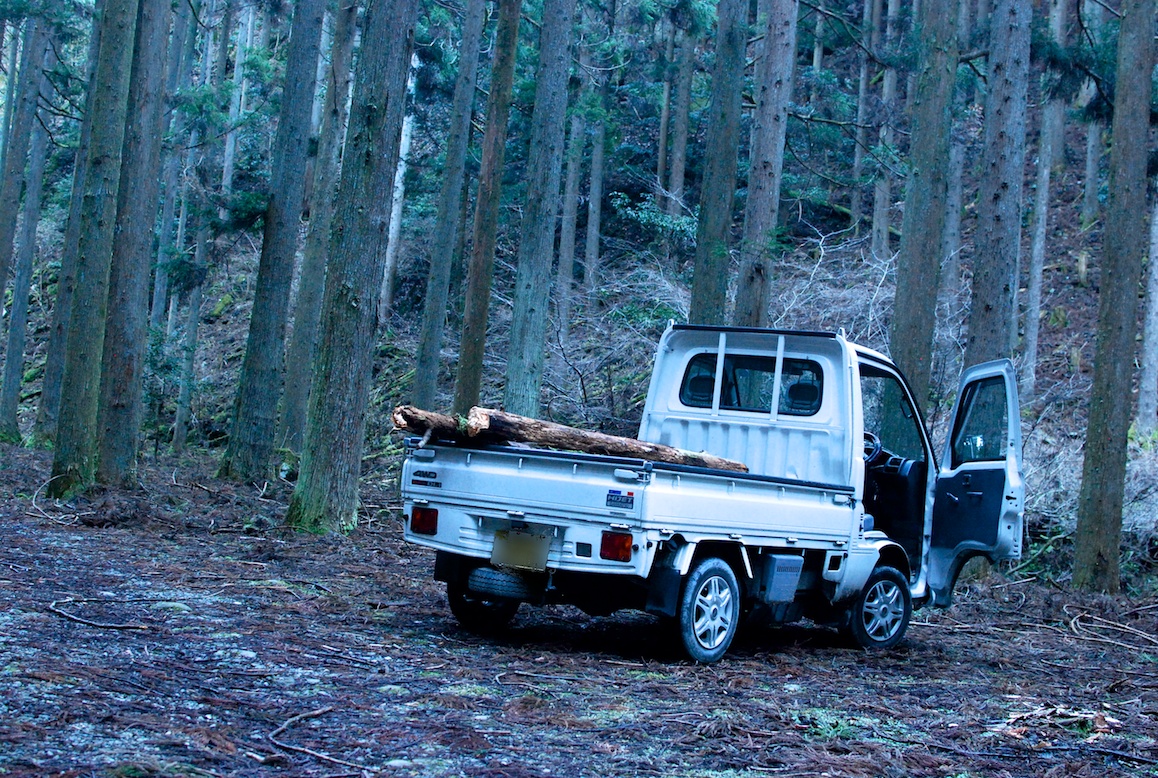
Je décide d’essayer aussi à mon tour. La journée a été bien chargée et je pars dans mon petit camion peu avant la tombée de la nuit, destination le fond de la vallée, où la route se dilue dans la montagne. J’emporte une hache et une fourche. Et le petit tour dans la nature qui s’ensuit, à peine une heure devient une petite aventure en soi. Quel plaisir que de passer ces quelques instants volés au quotidien dans la pleine nature. En forêt.
400 mètres après la dernière maison du village un jeune chevreuil croise le petit chemin de pierres, à quelques enjambées du camion.
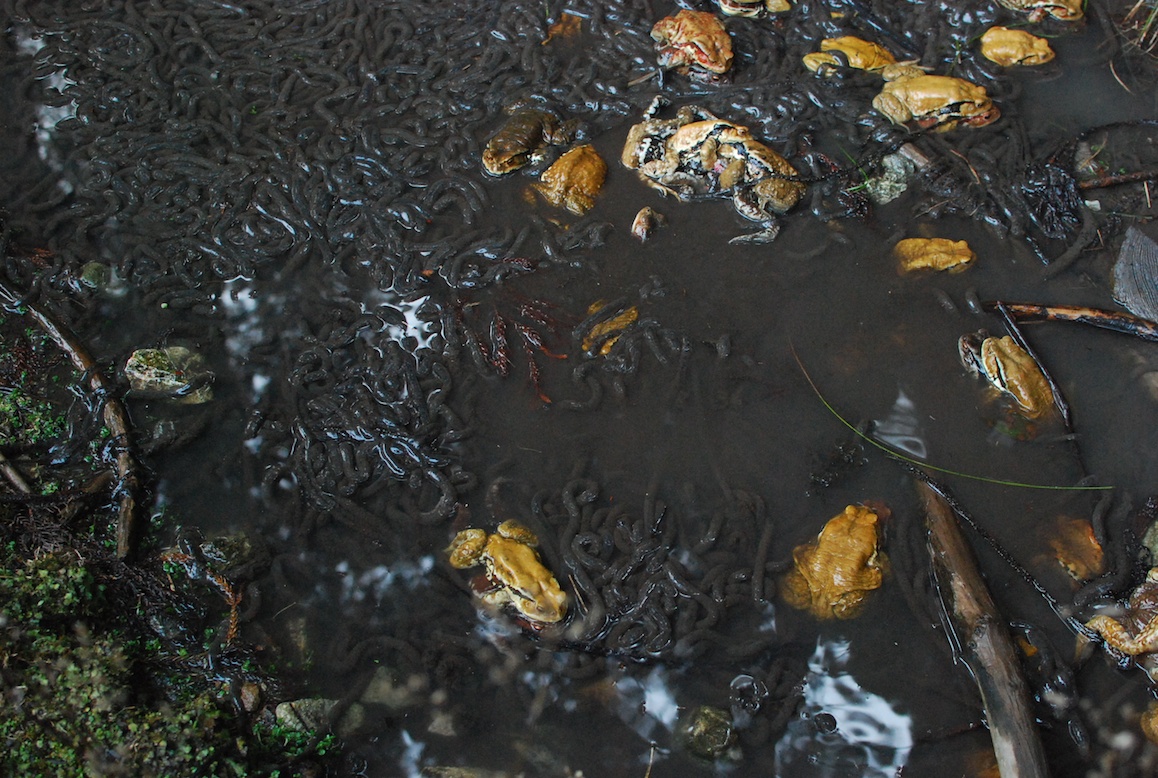
Un peu plus loin sur le bord du chemin; peu après les ruines d’un temple qui a disparu dans un incendie il y a quelques années, des tâches brunes s’étalent dans une flaque d’eau. Je m’arrête et descends du camion pour voir de quoi il s’agit. Oups, des dizaines de crapauds partouzent tranquillement comme si de rien n’était. La puissance de la nature. Il doit déjà y avoir des dizaines de milliers d’oeufs dans cette flaque d’eau. Qui sait combien de ces oeufs formeront des têtards, et combien feront le régal des tritons et des salamandres, et combien deviendront de beaux crapauds bien gluants en mesure de perpétuer l’espèce.
Je repars dans le camion après cette découverte. Continue jusque plus profond dans la montagne et la forêt. Il y reigne un silence profond, seul le courant d’une rivière est audible.
La, je pars à la recherche de vielles souches et de bois mort. A la hache je coupe les vieux troncs tombés sur le sol que la mousse recouvre. Quel plaisir que de tapper, frapper le bois et regarder la lame de la hache déchiqueter le bois. Je sens mon corps s’éveiller, le sang irriguer mes muscles à mesure que j abats la hache sur les troncs d’arbre. Ouah ce doit etre bien beau que d’abattre un arbre à la hache me dis-je. La tronçonneuse, c’est bien laid. C’est encore la belle saison, il n’y a pas d’insectes ni serpents.
Les chocs de la hache résonnent dans toute la forêt. Je ne me sens pourtant pas seul.
Je rammasse aussi des feuilles mortes, des branches tombées ça et là sur le sol humide et noir.
Tout celà formera une superbe butte dans le jardin.
La nuit va bientôt tomber. C’est le moment de rentrer.
Je charge tout dans le petit camion, le keitora. Avant de monter et de démarrer, je lance « Merci Forêt » … je reviendrai sous peu.


Les oiseaux ont beaucoup de choses à dire ce matin
Les oiseaux ont beaucoup de choses à dire ce matin; les conversations fusent, .. pendant que les corbeaux comme d’hab font dans le sarcasme.
Le jardin, samedi matin
Ce samedi matin je me lève de bonne heure; 6 heures. Je commence la journée en offrant deux petits poissons à Minou le chat; et en faisant le feu dans le ventre de Calcifer. Toute la famille dort encore dans les futons bien chauds; mais lorsque tout le monde sera réveillé il fera moins froid dans la cuisine. Faut dire, nous n’avons d’autre moyen de chauffage que Calcifer notre poêle à bois.
Puis je vais derrière la maison dans le jardin, où je m’affaire avec grand plaisir. Cette année je veux apprendre le plus possible en terme de jardinage. L’année dernière c’était le chaos total dans le jardin; si bien que je ne me souvenais plus de ce que j’avais planté, ni quand ni où.
Cette année je m’organise, je prends des notes et je veux une démarche plus structurée, car sinon je n’apprendrai jamais. J’ai redéployé le jardin en petites sections distinctes; et mieux délimitées. J’ai même acheté deux bouquins français et le soir après le travail je révise mes légumes .
Ce matin donc je plante des pois et de la roquette. Des gestes simples et très agréables. Quel plaisir que de travailler la terre. C’est une très belle journée qui commence. Le soleil se lève. On sent que le printemps arrive. Il y a déjà quelques jours, j’avais remarqué le chant plus riche des oiseaux. Ecoutez.
A handmade life
Je viens de finir A Hand made life – in search of simplicity de Wiliam Coperthwaite.
Les chasseurs
Les chasseurs sont tous vêtus de costumes oranges. Ils sont discrets et silencieux. Leur visages sont fatigués. La lumière, à l’intérieur, est éteinte. Ils trainent la dépouille du chevreuil jusqu’au bord d’une rivière. Ils ne chassent plus pour le plaisir, mais pour l’argent. Voila pourquoi.
Les chasseurs vont retirer deux incisives du chevreuil avec une pince et une hachette et vont le prendre en photo. Ca leur permettra de toucher une prime de la préfecture. 6500 yens (50 Euros ou $65US) par bête, pour plus de 21 bêtes abattues dans la saison. Car le chevreuil est considéré comme nuisible.
Puis ils nous disent qu’on peut garder le chevreuil abattu si on veut et que sinon, ils iront le balourder au fond de la montagne. Visiblement ils en mangent tous les jours et n’ont pas besoin de s’encombrer.


Vous devez être connecté pour poster un commentaire.